- Home
- About Us
- Research Directorates
- VC & CEO’s Grant
- Publications
- Resources
- Ongoing Projects
- Contact Us
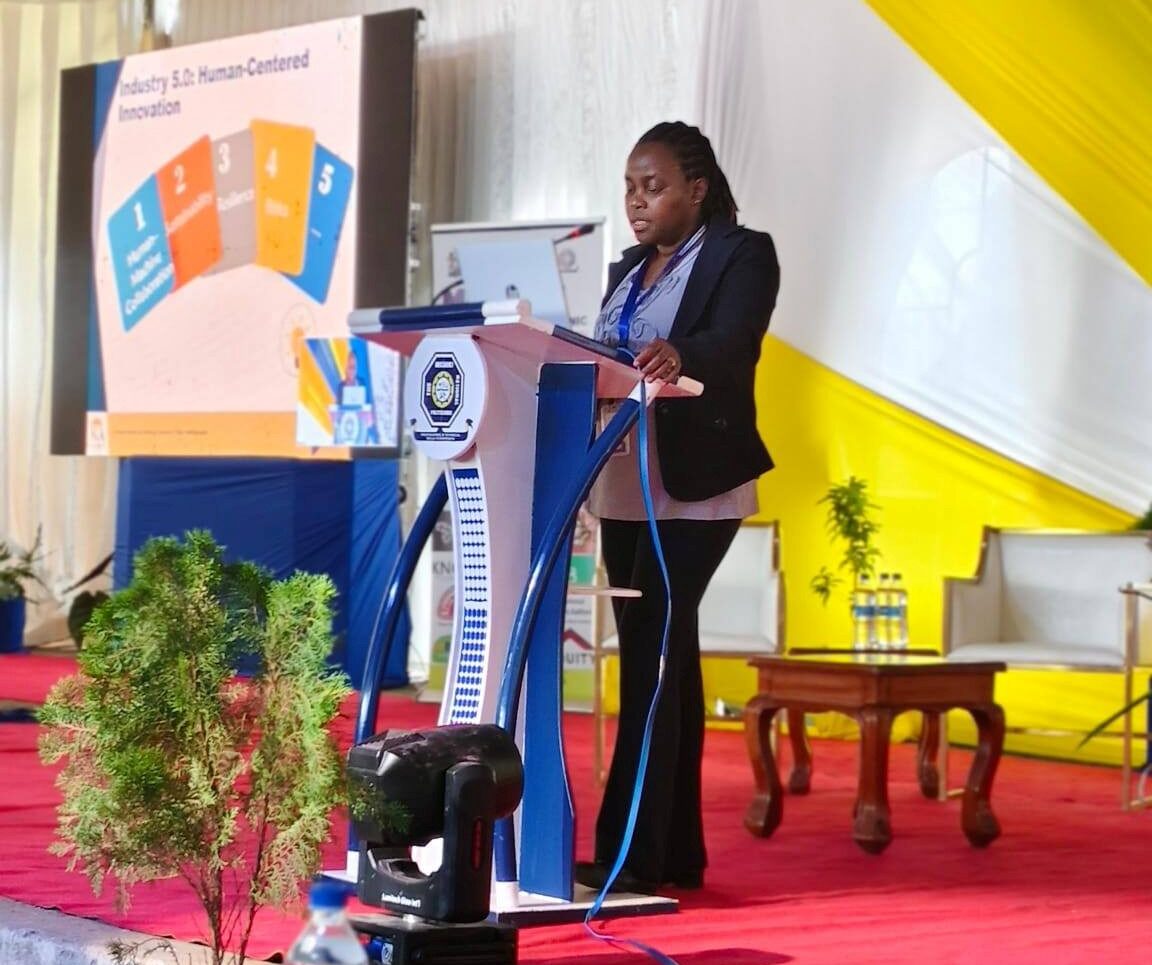
KCA University continues to position itself at the forefront of research, innovation, and thought leadership across the region. This was demonstrated through the participation of Prof. Dr. Lucy Waruguru Mburu, Dean of Research, Innovation and Outreach, as a keynote speaker at the inaugural International Research Conference (ICRIST-1) hosted by Michuki National Polytechnic.
Held on19th–20th February 2026, the conference brought together a diverse community of scholars, industry leaders, policymakers, and innovators. Under the theme “Harnessing Research, Innovation and Technology for Sustainable Economic Development and Youth Empowerment,” the event created a vibrant platform for dialogue on the future of education, skills, and economic transformation.
A Timely Conversation on the Future of Work
Prof. Waruguru delivered a thought-provoking keynote titled “Industry 4.0 & 5.0 and the Future of Work Among TVET Youths.” Her address explored how rapidly evolving technologies—ranging from artificial intelligence and automation to data analytics and human-centred innovation—are transforming the global labour landscape.
At the heart of her message was a clear call to action: education systems, particularly within the Technical and Vocational Education and Training (TVET) sector, must evolve just as rapidly as the industries they serve. She emphasised that preparing youth for the future of work requires more than technical proficiency. It demands a balanced approach that integrates digital skills with critical human capabilities such as creativity, adaptability, and problem-solving.
From Industry 4.0 to 5.0: What It Means for Youth
A central theme of the keynote was the transition from Industry 4.0 to Industry 5.0. While Industry 4.0 has focused on automation and digitalisation, Industry 5.0 introduces a more human-centred, sustainable approach to innovation.
This shift presents both opportunities and challenges for young people entering the workforce. Prof. Waruguru highlighted several key priorities:
The conference underscored the growing importance of collaboration within the TVET ecosystem, particularly in fostering applied research, innovation, and skills development that directly respond to industry needs.
For KCA University, the engagement opened up promising avenues for partnership with TVET institutions in areas such as curriculum alignment, youth empowerment, and entrepreneurial development.
As conversations around the future of work continue to evolve, platforms such as ICRIST-1 play a critical role in shaping the direction of education and workforce development. KCA University remains committed to actively contributing to these conversations—ensuring that research, innovation, and education translate into meaningful societal impact.
Through engagements like this, the University is not only strengthening its academic footprint but also helping to shape a generation of graduates equipped to thrive in an increasingly complex and technology-driven world.